Library
Automation

Clone Your Voice to Run Sales and Coaching Agents 24/7

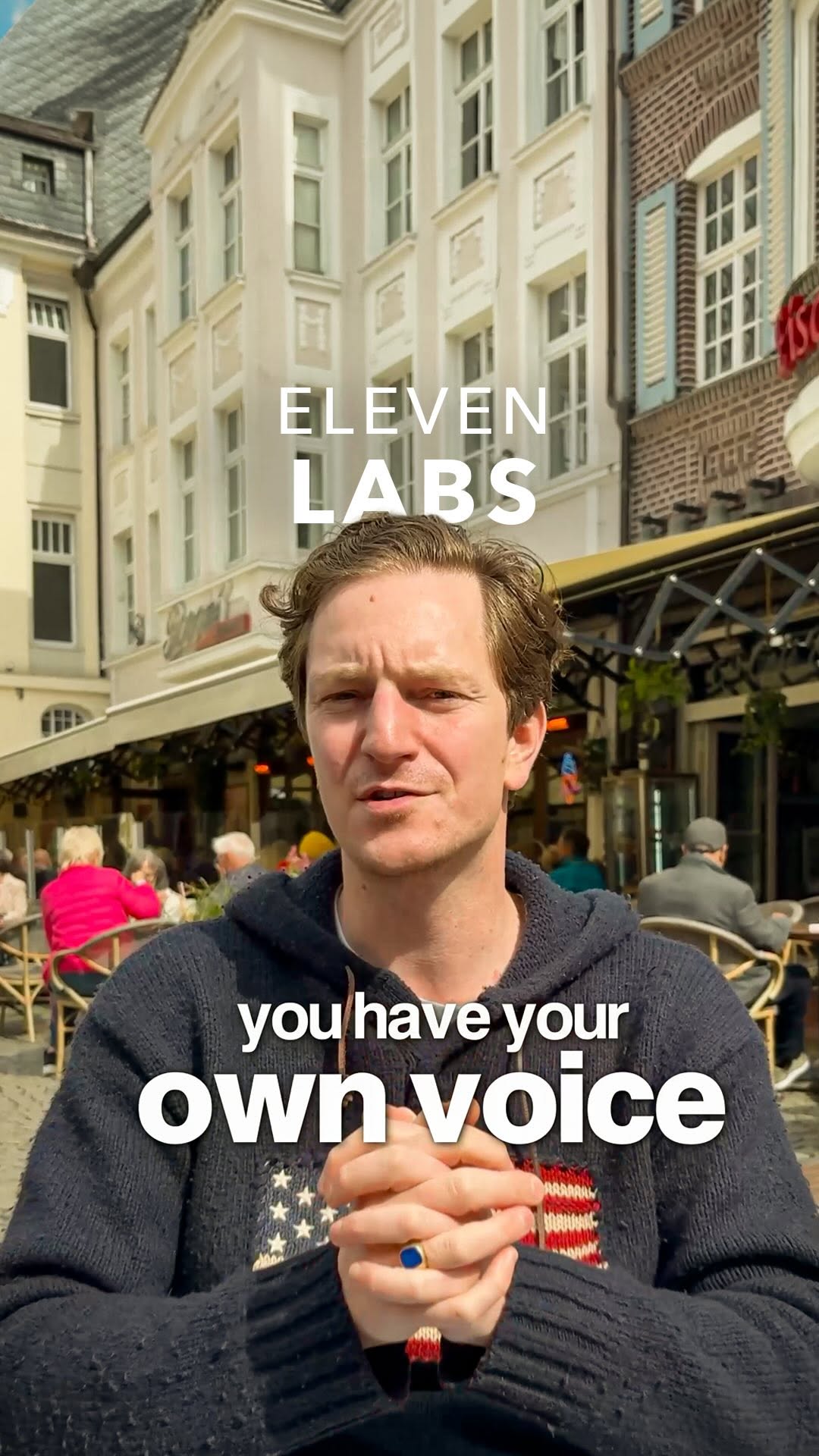
A practical breakdown of how founders use ElevenLabs voice cloning to power always-on sales and coaching agents. Covers what actually works, where it breaks, and how to set it up without hiring anyone new.

The short version

  • Around 30 minutes of clean audio is enough to clone a voice that sounds like you.
  • A cloned voice can power sales agents, support, or coaching inside any app.
  • This scales your presence without adding headcount.
  • The voice is easy. The script and logic behind it are the real work.
  • Start with one narrow use case before trying to clone your whole business.

Going deeper

What the workflow actually looks like

The setup is simpler than most people expect. You go into ElevenLabs, open voice cloning, and upload about 30 minutes of your own voice.

Once it processes, you have a voice model you can plug into almost anything. A sales agent. A support bot. A coach that answers questions inside your app.

The part people miss is that the clone is just the audio layer. It reads whatever text you feed it. So the quality of the experience depends far more on what the agent is programmed to say than on how the voice sounds.

Why founders reach for this

Most founders are still doing outreach and onboarding by hand. Every discovery call, every repeated coaching answer, every support message eats the one thing they cannot buy back.

A cloned voice lets your answers exist without you sitting there saying them. If you teach people how to play chess or how to run better ads, the explanation you have given a hundred times can now be delivered in your voice at 3am while you sleep.

My read is that the appeal is less about sounding fancy and more about not being the bottleneck for everything.

Where it works and where it falls apart

Voice cloning is strong for repeatable, structured moments. FAQ-style support. Guided lessons. Qualifying a lead before a human ever picks up. Anything where the questions are predictable, this holds up well.

It gets shaky when the conversation needs real judgment or emotional read. A prospect with a weird objection or a coaching client having a hard day will notice when the answer is generic.

So I keep telling people to treat the clone as a first layer, not the whole relationship. It handles volume. You handle nuance.

Getting the recording right

The clone is only as good as the audio you feed it. Record in a quiet room, one take of natural speaking, not a stiff read-through.

Talk the way you actually talk. If your agents will explain things casually, record casually. The model picks up your rhythm and pauses, and those small things are what make it sound like you instead of a narrator.

A practical tip: pull 30 minutes from an existing podcast or webinar where you were relaxed. That usually beats sitting down cold to record for the machine.

A grounded starting point

Do not try to clone your entire operation on day one. Pick one narrow job.

The easiest win I have seen is a support or FAQ agent inside a product people already use. Feed it your 15 most common questions with the answers you would actually give. Ship that. See if people trust it.

Once that runs cleanly, you extend it into qualifying leads or delivering course lessons. Build the reliable version of one thing before you promise yourself an army of you.

Want to go deeper?

Let's look at it together.

One call, one on one. We take this and apply it to your account or your workflow.

Book a call

Sources